Gold Price Today: Why Rates Are Sliding as US-Iran Peace Talks Progress
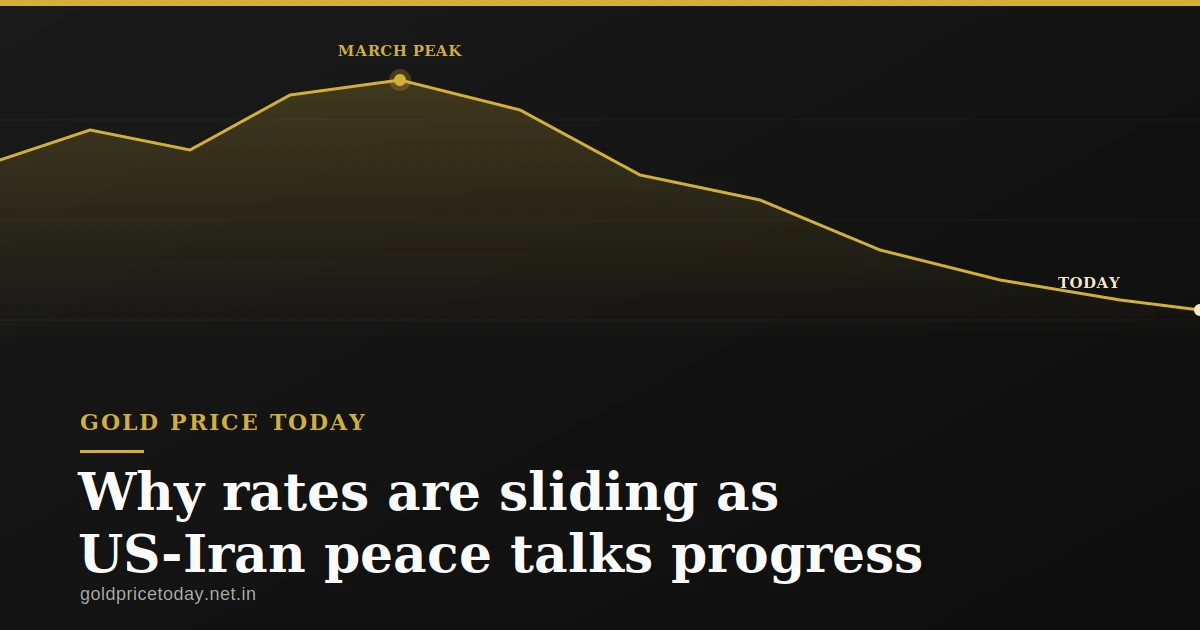
Gold prices in India have continued their pullback this week as easing tensions between the US and Iran reduce the safe-haven demand that drove prices to record highs earlier in 2026. MCX gold futures slipped below the ₹1,50,000 per 10 grams mark, extending a multi-week decline that has caught the attention of buyers who have been waiting for a better entry point.
For a market that spent much of the first quarter of 2026 climbing to all-time highs, this correction marks a meaningful shift in sentiment. Understanding what's driving it can help you decide whether now is the right time to buy.
What's Driving the Decline This Week
The biggest catalyst behind this week's drop is progress in US-Iran negotiations. Washington has reportedly granted Iran a 60-day license to resume oil exports, and both sides are said to be working toward a broader peace framework. Shipping through the Strait of Hormuz has picked up, with Gulf producers including Kuwait and the UAE finding alternative export routes even as tensions persist elsewhere in the region.
This matters for gold because the conflict, which escalated earlier this year, had been a major driver of gold's safe-haven rally. Crude oil prices spiking above $90 a barrel earlier in 2026 fed directly into inflation fears, which in turn boosted demand for gold as a hedge. With oil supply concerns now easing, some of that built-in risk premium is coming out of gold prices, and traders who had piled into the metal on fear of disruption are now unwinding those positions.
It's worth noting that the situation remains fluid. Iran has previously threatened to close the Strait of Hormuz, and while millions of barrels of crude continued to pass through the waterway over the past week, any fresh escalation could quickly reverse the current calm and send gold higher again.
US Federal Reserve Stance Adds Pressure
Compounding the pullback, the US Federal Reserve has maintained a hawkish tone in recent meetings. Markets are now pricing in the possibility of a rate hike as early as September, a sharp reversal from earlier expectations of rate cuts that had supported gold through much of the year. Both Deutsche Bank and BofA Global Research have revised their outlooks to include a potential rate increase later this year, and nine of the Fed's nineteen policymakers are now projecting at least one hike before year-end.
Higher US interest rates make non-yielding assets like gold less attractive relative to bonds, which offer guaranteed returns. A firmer US dollar — which typically strengthens alongside rate-hike expectations — also makes gold costlier for buyers outside the US, including in India, since India imports nearly all of its gold and prices are set in dollar terms before being converted to rupees.
Investors are now closely watching the upcoming US PCE inflation report, the Fed's preferred inflation gauge, for further signals on the central bank's rate path. A hotter-than-expected reading could reinforce the case for a hike and add further pressure on gold, while a softer number could spark a relief rally.
What This Means for Indian Buyers
For Indian consumers, the combination of a cooling Middle East conflict and a more hawkish Fed has translated into a meaningful pullback from the highs seen in March 2026. Gold purchased today sits well below the peak levels recorded earlier this year, giving buyers planning purchases for upcoming family functions, weddings, or as a long-term investment a window worth watching closely.
That said, the picture is not one-directional. Central banks around the world have continued to be net buyers of gold for several consecutive years, a structural trend that has nothing to do with short-term geopolitics and continues to provide a floor under prices. Rising US government debt and ongoing concerns about currency debasement also remain long-term bullish factors for gold that haven't gone away just because near-term sentiment has cooled.
Short-term traders should watch incoming US economic data closely before making large bets in either direction. Long-term buyers — particularly those purchasing Sovereign Gold Bonds for the added benefit of 2.5% annual interest, or those planning jewellery purchases ahead of the festive season later this year — may find current levels a reasonable entry point given how far prices have already corrected from their highs.
Check Today's City-Wise Gold Rates
Gold prices vary across Indian cities due to differences in local taxes, transportation costs, and regional demand patterns. Before making a purchase, it's worth comparing rates across cities since the difference can run into a few hundred to a couple of thousand rupees per 10 grams depending on where you shop.
Use our live gold rate tracker to check today's prices in Delhi, Mumbai, Chennai, Bangalore, Hyderabad, Kolkata, and other major cities across India. You can also use our Gold Price Calculator to estimate the exact cost of your purchase including making charges and GST, so you know what to expect before you walk into a showroom.
Frequently Asked Questions
Q: Why are gold prices falling in India this week?
Gold prices are falling primarily due to easing US-Iran tensions, which has reduced the geopolitical risk premium built into prices, combined with a more hawkish US Federal Reserve stance that has increased the likelihood of interest rate hikes later this year.
Q: Will gold prices recover after this dip?
Analysts remain divided on the near-term outlook. Long-term factors such as continued central bank gold buying and structural concerns over US debt levels support a bullish case beyond 2026. However, near-term direction will largely depend on how the US-Iran peace process unfolds and what upcoming US inflation data shows.
Q: Is now a good time to buy gold in India?
With prices well below the March 2026 highs, many long-term buyers view current levels as a reasonable entry point, particularly those buying ahead of the festive season. Short-term traders may want to wait for more clarity on the Fed's rate decision before making large purchases.
Q: How does the US-Iran situation affect Indian gold prices?
India imports the vast majority of its gold, so international dollar-denominated prices directly influence domestic rates. Geopolitical tensions that threaten oil supply routes like the Strait of Hormuz tend to push gold higher as a safe-haven asset; when those tensions ease, some of that built-up premium unwinds, which is exactly what's happening right now.
Q: What should I watch to know where gold prices are headed next?
Keep an eye on three things: the progress of US-Iran peace negotiations, the US Federal Reserve's upcoming policy decisions and the PCE inflation report, and the USD/INR exchange rate, since all three directly feed into what you'll pay for gold in India.